
How to Fix Echo in Your Home Office Without Turning It Into a Cave
Clients either have a room that echoes or one they soundproofed so hard they hate being in it. Here is the middle ground that sounds good and still feels like home.
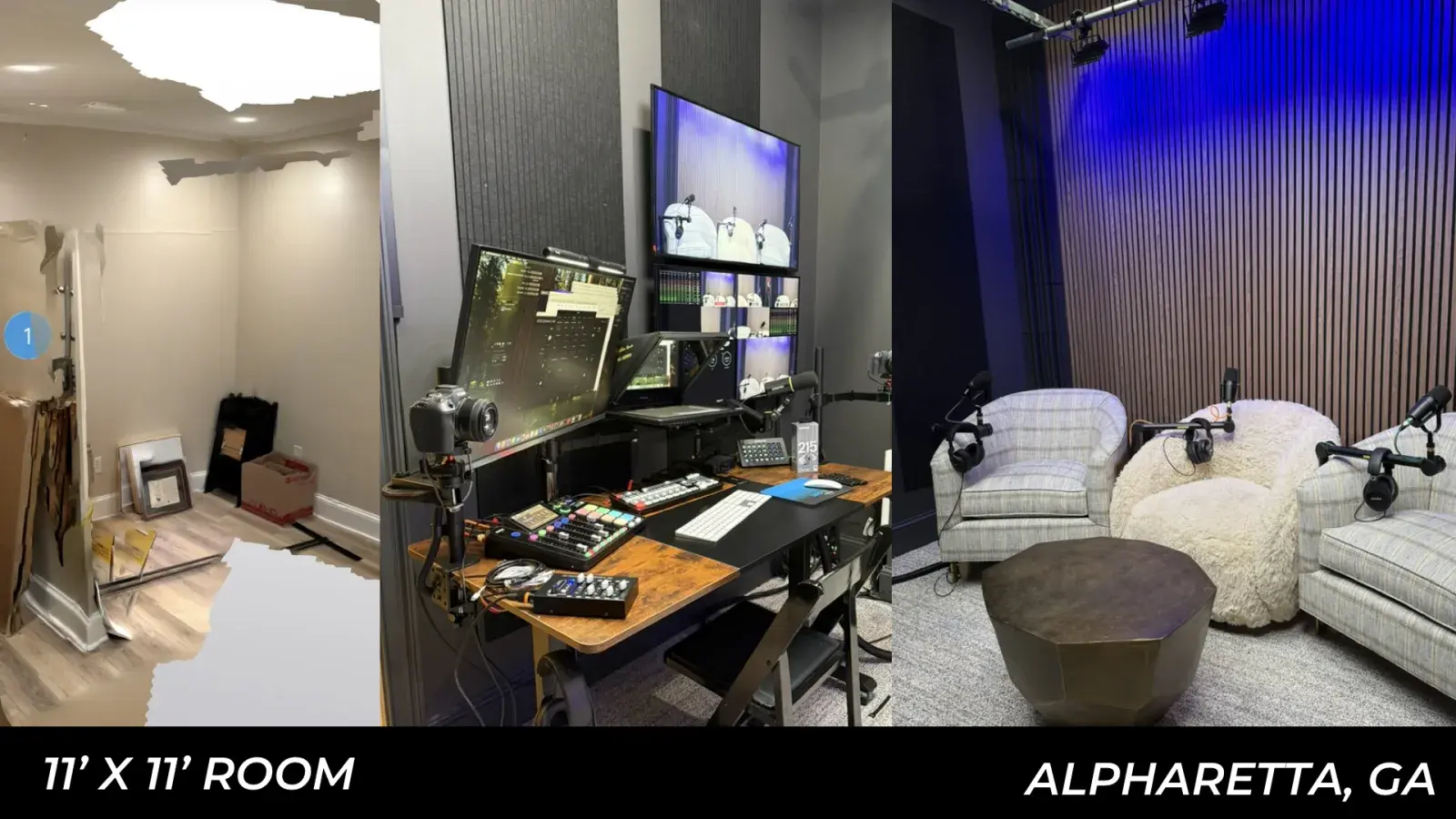
I see two kinds of rooms on discovery calls.
The first one echoes. Hard floor, bare walls, a big desk, and a very good microphone that is faithfully recording every reflection in the room.
The second one is the opposite. Someone fixed the echo by hanging moving blankets on every wall. It sounds great. And they tell me they feel like they are sitting in a cave, so they never invite a guest in.
Both are fixable. The answer is in the middle.
Why a good mic does not fix echo
Echo is the room, not the mic. Sound leaves your mouth, bounces off the hard surfaces, and arrives at the mic a split second later. An expensive mic just captures that bounce in higher quality.
Here is a test I learned the hard way. Pull the rug out of a room and listen. The echo is suddenly obvious. You stop hearing your own room after a while, but your audience hears it every time.
Soundproofing is not acoustic treatment
People use these words like they mean the same thing. They do not.
Soundproofing keeps noise from getting in or out. The leaf blower, the kids, the dog. It is construction work: sealed doors, mass in the walls.
Acoustic treatment controls how sound behaves inside the room. That is what fixes echo, and it is far simpler.
Most home offices need treatment, not soundproofing.
The middle ground
You want to absorb enough reflection to sound clear, without killing all the life in the room. In order:
- Soft things first. A rug, curtains, a couch, a full bookshelf. These help more than people expect, and they make the room nicer to be in.
- Panels where the sound hits. A few acoustic panels on the wall you face and the wall behind you, roughly at head height. Not every wall. Not the ceiling first.
- The mic closer to you. The closer the mic, the louder your voice is compared to the room. A mic two feet away hears the room. A mic a few inches away hears you.
Then stop and listen. Most rooms are done well before the walls are covered.
Keep it a room you want to be in
The goal is not a recording booth. It is a space that sounds clear and still feels like your office, where you would happily bring a guest.
If the room looks good and feels good, you will use it more. That matters more than the last few percent of sound.
Want to know whether your room needs treatment or just a rug? Book a discovery call, or start with the DIY vs hiring guide.
- #audio
- #acoustics
- #home-office
Ready to build the real thing?
When you're ready for a done-for-you studio, book a discovery call and we'll map a build that fits your space.