Stage 5 of Home Studio Evolution: The Professional
Stage 5 of the 7 stages of home studio evolution. More than one camera, professional editing and audio software, and a studio that has become a business asset. At this level the bottleneck is your systems, not your gear.
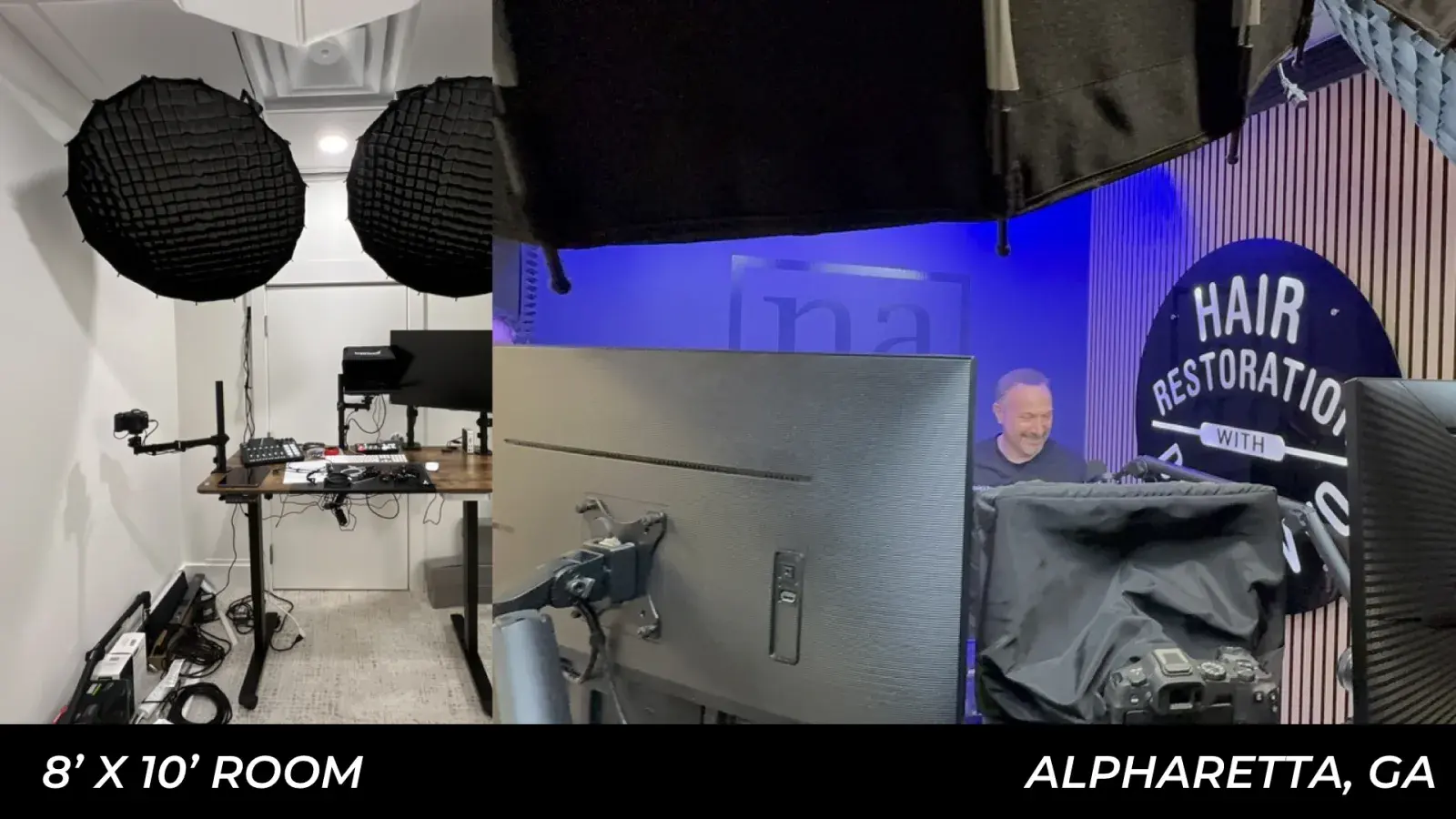
An educator who teaches courses had two good cameras in his studio. But every time he cut from one to the other, it looked like he had walked into a different room.
Same desk. Same bookshelf. Same person. Different color, different brightness.
We fixed it on a call. We brought the ISO down step by step on the main camera, then matched the white balance, shutter and ISO between the two. He said the match was better than anything he would have done on his own.
Two cameras are easy to buy. Making them look like one show is Stage 5.
What the Professional stage is
In 7 Stages of Home Studio Evolution, Stage 5 is The Professional: integration of high-end gear and software. Your studio, your standards.
You are producing work that holds up next to professionals. More than one camera, advanced editing and audio software, a space designed down to the details. Your studio is now a business asset, and the book talks about building on it with sponsorships and memberships.
Quality no longer swings from one shoot to the next.
What to focus on as a Professional
The book's focus areas for Stage 5:
- Multi-camera recording, through a capture card or a switcher, with a full-frame camera as your main angle and a second camera alongside it.
- Studio-quality audio post-production. The book uses Adobe Audition, with a shotgun microphone joining the kit.
- Real color and editing work. The book uses Adobe Premiere Pro for grading and advanced edits.
- A content business, not just content: sponsorships, memberships, work that pays for the studio.
Record it where it lives
The more cameras you add, the more ways things drift apart.
The marketing director of a nonprofit with several podcasts showed me their process. Audio went into a podcast mixer. Video came from a spare phone, got uploaded to YouTube as private, downloaded to a laptop, and synced by hand. By about 28 minutes in, the picture and the sound no longer lined up.
The drift came from all that conversion. The fix was to record everything locally, with a video switcher taking the mixer's audio so picture and sound land in one place, already in sync.
It's always good to work on content that's recorded locally.
Plan for the day something breaks
At this level, your recordings are worth real money. So the question changes from "does it look good?" to "what happens if I lose it?"
A founder told me about the trip to his first big competition. Months of documentary footage. After the win, someone broke into his hotel room and took the camera gear, along with footage that had never been backed up.
What he asked me for was one button that records every camera to an external drive, which then syncs to the cloud. That is the Stage 5 habit: backup recording and backup audio, so nothing precious is ever lost.
The Professional takeaway
From the book: at this level, the bottleneck is no longer your gear. It is your systems and strategy.
What comes next
Add proper monitoring and color, so your work holds up on any screen, and build in redundancy everywhere it matters. Then you are ready for Stage 6.
Prefer slides? Flip through the Stage 5 deck.
Read the series from Stage 1: The Novice, or take the free 7 Stages quiz to find your stage. If you want a multi-camera room planned and built with you, book a discovery call.
Hit record.
- #7-stages
- #professional
- #multi-camera
- #workflow
Ready to build the real thing?
When you're ready for a done-for-you studio, book a discovery call and we'll map a build that fits your space.