Stage 4 of Home Studio Evolution: The Semi-Pro
Stage 4 of the 7 stages of home studio evolution. One room stops doing everything. A professional audio chain, a full-frame camera, and zones for recording and editing, so the setup works for you instead of the other way around.
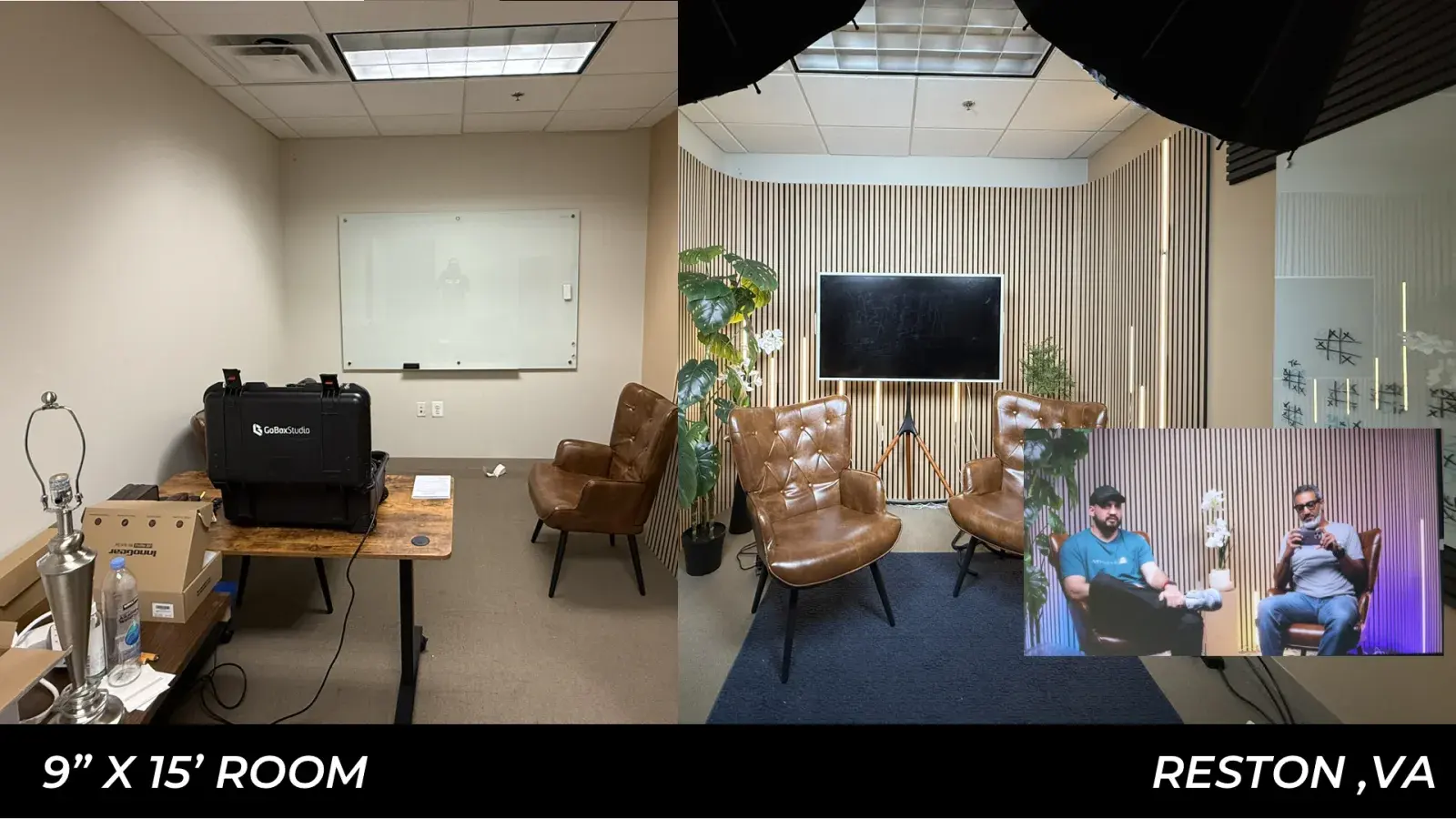
A videographer and coach told me his routine. Every time he wanted to make a video, he got the camera out of the case, set up the tripod, found the light, recorded, and packed it all away again.
He wanted a setup that stayed put. But he only had one camera, and he was thinking about buying a new one.
I told him to buy an older, used camera and leave it in place. The camera behind my own teleprompter is from 2018. Nobody would know, because cameras and physics don't change.
That is the Stage 4 mindset. You stop setting up. The studio is just ready.
What the Semi-Pro stage is
In 7 Stages of Home Studio Evolution, Stage 4 is The Semi-Pro: advanced equipment and specialized areas. Refine your space, enhance your output.
At this stage your studio is no longer one room doing everything. It is zoned. A dedicated place to record, a focused place to edit, and somewhere for the gear to live. People are starting to assume you do this for a living.
Zones, not just gear
An executive assistant planning a studio for a busy business coach described his day to me. He is a guest on podcasts, teaches at a whiteboard, records social videos and does screen recordings, moving around the office as he goes.
So we planned it in modes. Each area has its own lights and a button. Someone on his team sets the mode, and he walks in, puts on the microphone, and starts talking.
That is what the book means by ergonomic zones. Record, edit, relax, each in its own place, so you are never rebuilding one to use the other.
The audio chain grows up
A live-stream producer I know started out firmly against having a microphone in the shot. Then she recorded in a bedroom corner with tall ceilings and a busy household, and her mics picked up the whole room.
She moved to a broadcast-style dynamic microphone through an audio interface. Now she calls herself a show-the-microphone person, because the quality was too good to hide.
That is the Stage 4 audio upgrade: an XLR microphone into a professional interface, a signal chain you control.
What to focus on as a Semi-Pro
The book's focus areas for Stage 4:
- A full-frame mirrorless camera for a more cinematic picture.
- A professional audio interface with an XLR microphone.
- Ergonomic zones for recording, editing and rest, plus a proper monitor stand and desk setup.
- Measured acoustic treatment. Bass traps and diffusers placed where the room actually needs them, not where they fit.
Mount it and keep the floor clear
In my own studio, the lights and an overhead camera hang from the ceiling on steel pipes attached to the studs. When I build rooms for clients, I mount the monitor, teleprompter and cameras on the desk and wall, run lights from the ceiling, and keep the floor clear.
I don't like anything on the floor. A fixed position for everything is what makes a studio repeatable.
The Semi-Pro takeaway
From the book: workflow design is as important as gear. A great process beats great gear in a bad process.
What comes next
Lock a lighting setup you can repeat, and tighten the path from edit to publish, so your quality stops depending on how much time you have that day. That is where Stage 5 picks up.
Prefer slides? Flip through the Stage 4 deck.
Read the series from Stage 1: The Novice, or see what an always-ready studio looks like. Not sure where you are? Take the free 7 Stages quiz.
Hit record.
- #7-stages
- #semi-pro
- #workflow
- #audio
Ready to build the real thing?
When you're ready for a done-for-you studio, book a discovery call and we'll map a build that fits your space.